Travel season guide
Why India's wedding season peaks in winter
A season shaped by the calendar
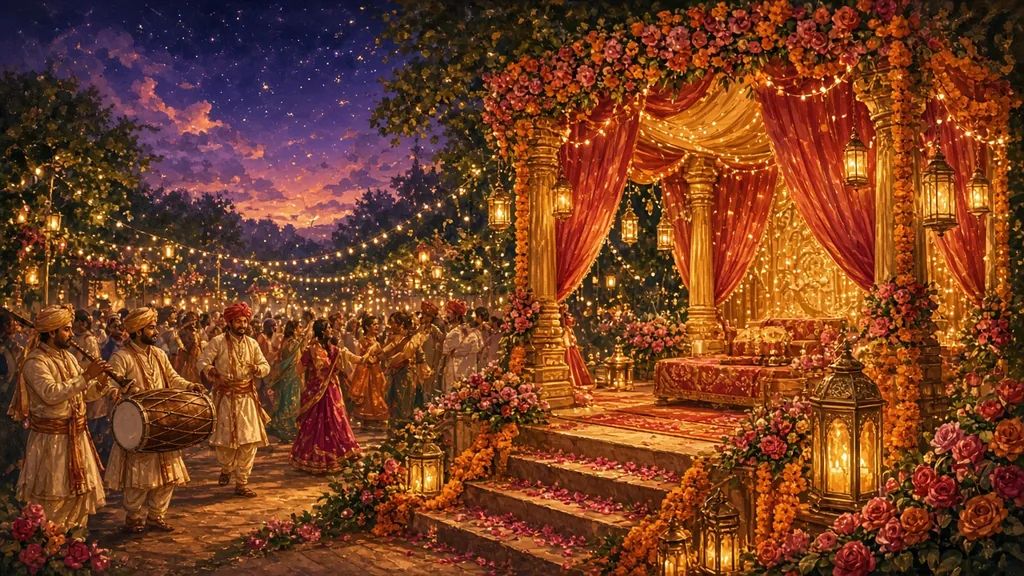
This page is about a travel season rather than a single festival. For many Hindu families in North and Central India, the wedding year restarts after Dev Uthani Ekadashi (also called Prabodhini Ekadashi) in the month of Kartik. Tradition holds that Lord Vishnu rests for four months during Chaturmas, the monsoon period, and wakes on this day; many families avoid weddings until then. In many homes the same day or the days after see Tulsi Vivah, the ceremonial marriage of the tulsi plant to Vishnu, which is often treated as the opening of the shaadi season.
From there, families choose a muhurat — an auspicious date and time — with the help of a priest and a panchang. Muhurats depend on the positions of the sun, moon and planets, so the number of good dates changes every year. Weddings are usually avoided during Kharmas (also called Dhanurmas or Malmas), roughly mid-December to mid-January, when the sun is in Sagittarius, and again for a month around March–April. That is why the November–December window is so crowded, and why some years have many more dates than others.
Not one tradition, but many
India's weddings follow many calendars. Sikh weddings (Anand Karaj) are not tied to Hindu muhurats, though families often choose winter for practical reasons. Muslim weddings follow family choice and the Islamic calendar, and are usually avoided in some months such as Muharram. Christian weddings in Kerala, Goa and the North-East often cluster around the Christmas holidays. In South India, many Hindu communities follow their own regional calendars, with popular wedding months such as Thai and Vaikasi in Tamil Nadu. So the 'wedding season' is really several overlapping seasons, with the November–December peak most visible in the North.
Why winter works
Beyond the calendar there are practical reasons. The kharif harvest is in, so farming families have more time and money. The weather in the plains is pleasant for outdoor functions and long evenings of sangeet and baraat. School exams are still some months away, and the festival holidays of Diwali and Chhath have just brought families together, which makes it easier to plan.
Weddings have also become a major reason to travel. Relatives fly in from other cities and abroad, and destination weddings in Udaipur, Jaipur, Goa and Kerala add their own demand.
What this means for travellers
Because so many weddings fall on the same handful of dates, flights to big wedding cities fill up on the Friday and Saturday around each muhurat. Exact dates vary by region and family, so always check with your family priest before booking. Then book as soon as the date is fixed, fly in a day early, and keep wedding clothes and jewellery in your cabin bag.